

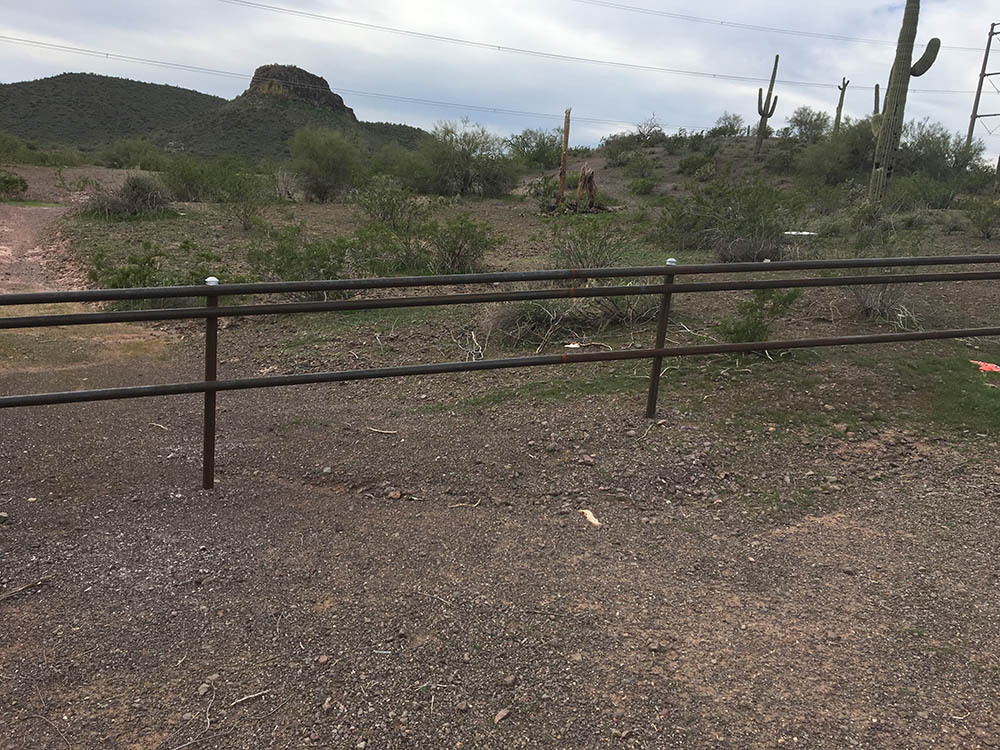
Arizona Ranch Vegetation Management
Herbicide Treatment in Arizona: Invasive Plant Control for Ranches & Land
How targeted application, timing, species identification, and proper licensing determine whether a weed control program actually clears a pasture or simply wastes money.
Invasive weeds and encroaching brush steal water, crowd out native forage, and create heavy fire fuel on Arizona ranches. A tractor and a mower will not solve the problem. Cutting a mesquite tree or a saltcedar without treating the stump just forces the plant to push up multiple new stems. You end up with a denser thicket the following year.
That is why the targeted herbicide treatment Arizona ranchers rely on is often the only permanent fix. Noland Tough combines certified chemical application with mechanical clearing to reclaim pastures, fence lines, and riparian zones across Yavapai County and the rest of the state.
This guide explains how professional invasive plant control Arizona landowners need actually works. It covers application methods, the chemicals involved, how to handle rugged terrain, and the legal requirements for spraying restricted-use pesticides on commercial agricultural land.
Why Mowing and Cutting Fail as Standalone Solutions
Mechanical removal eliminates the top of the plant. It does not kill the root system. Many invasive species in the Southwest evolved to survive physical damage.
Root Sprouting
Species like mesquite and saltcedar have deep taproots. Cut them, and they send up dozens of new shoots to replace the lost canopy.
Seed Spread
Mowing mature weeds scatters seeds across the pasture. You end up planting the exact weed you are trying to destroy.
Soil Disturbance
Heavy equipment tears up the topsoil. Disturbed dirt is the preferred environment where invasive weeds germinate fastest.
Terrain Limits
You cannot safely drive a tractor on steep, rocky, or heavily washed Arizona slopes to reach the deep brush.
Management rule: A chainsaw or a skid steer makes brush smaller. Herbicide kills the root. Effective ranch management requires combining the two approaches.
Core Methods for Invasive Weed Control Arizona Ranches Use
The goal is to apply the exact amount of chemical needed to kill the target plant without damaging the surrounding native grass. Broadly spraying a pasture is rarely the right answer.
Cut-Stump Treatment
The tree or brush is cut near the ground. Herbicide is painted or sprayed directly onto the cambium layer of the fresh stump within minutes.
Basal Bark Application
Chemical mixed with an oil carrier is sprayed on the lower trunk of a standing tree. The oil penetrates the bark and kills the tree standing.
Foliar Spraying
Liquid herbicide is applied to the leaves of growing plants. This requires precise timing during the active growth phase.
Pre-Emergent Application
Granular or liquid treatments applied to bare ground before seeds germinate. This prevents new weeds from breaking the surface.
Spot Treatment
Targeted spraying from a UTV or backpack sprayer. This isolates the invasive plant and protects the surrounding forage.
The correct method depends entirely on the plant species, the time of year, and the proximity to water or desired trees.
Comparing Vegetation Management Approaches
Every ranch requires a mix of tools. Here is how the primary vegetation control methods compare on effectiveness, cost, and best use.
| Management Type | Root Kill Rate | Visual Result | Best Use |
|---|---|---|---|
| Mechanical clearing | Low. Often triggers resprouting | Immediate visual clearance | Initial clearing before chemical follow-up |
| Prescribed fire | Moderate. Depends on burn heat | Clears dead brush and fine fuels | Large acreage with heavy existing fuel loads |
| Biological grazing | Low. Very slow reduction | Maintains low grass heights | Ongoing maintenance after primary clearing |
| Herbicide treatment | High. Destroys the root system | Plants brown out over weeks | Eradicating deep-rooted brush and noxious weeds |
A standard approach on dense brush is to cut the heavy material mechanically to regain access, then apply targeted herbicide to the fresh stumps or the regrowth the following season.
The Legal Reality of Commercial Herbicide Application
You cannot hire a general handyman to spray commercial ranchland. The State of Arizona tightly regulates who can apply agricultural chemicals, and the liability for illegal spraying lands on the property owner.
Working with an unlicensed operator risks massive federal fines, dead livestock, and long-term soil damage.
Timing the Treatment for Maximum Root Kill
Herbicide only works if the plant absorbs it and moves it into the root system. Spraying a dormant plant with a foliar chemical wastes both time and money.
Active Growth Phase
Foliar herbicides work best when the plant is actively growing and moving nutrients from its leaves down to its roots.
Monsoon Rains
In Arizona, the summer monsoon triggers a massive flush of weed growth. This creates the optimal window for many foliar treatments.
Fall Translocation
As winter approaches, perennials pull nutrients down into their root systems. Herbicide applied now gets pulled down with them for a highly effective kill.
Dormant Season
Basal bark and cut-stump treatments are effective in the winter when the plant is dormant. This allows brush clearing to continue year-round.
If a contractor is willing to spray broadleaf weeds in the dead of winter, they do not understand plant biology.
Reaching the Weeds on Rugged Ground
The toughest invasive species often grow in the hardest places to reach. Washes, steep canyons, and remote fence lines require specialized equipment.
Target Invasive Species on Arizona Ranches
You must know exactly what you are killing. Different weeds require entirely different chemical groups and application methods.
| Invasive Species | The Problem | Typical Treatment Approach |
|---|---|---|
| Saltcedar (Tamarisk) | Chokes waterways, increases salinity, and consumes massive amounts of water | Cut-stump or basal bark with specific triclopyr formulations |
| Mesquite | Crowds out native grass, punctures tires, and creates dense thickets | Basal bark for small trees, cut-stump for mature growth |
| Knapweed and Thistle | Rapidly spreading noxious weeds that degrade pasture quality | Timed foliar spray with broadleaf-specific herbicides |
| Buffelgrass | Creates intense fire danger and burns extremely hot | Repeat foliar applications during active summer growth |
Using a generic weed killer off a hardware store shelf on mature saltcedar will accomplish nothing but burning the leaves off.
Spraying Near Washes and Stock Tanks
Arizona water law and federal environmental regulations dictate exactly how chemicals are handled near water. Mistakes here carry severe consequences.
Aquatic Formulations
Standard herbicides are highly toxic to fish and amphibians. Any spraying near standing water requires specific, aquatic-approved chemicals.
Seasonal Washes
Even if a wash is dry, you must treat it as a waterway if it flows during the monsoon. Residual chemicals can wash downstream.
Stock Tanks
Treatment around livestock drinking water requires strict setbacks and careful drift management.
Bank Stabilization
Killing dense saltcedar on a creek bank leaves dead roots that eventually rot. The treatment plan must account for potential bank erosion.
Why the Mix Matters as Much as the Chemical
Herbicide alone often beads up and rolls off the leaves of hardy desert plants. Applicators use additives called adjuvants to force the chemical into the plant.
Surfactants
These break the surface tension of the water droplet. They allow the chemical to spread flat and stick to the leaf.
Crop Oils
Oil-based additives dissolve the waxy cuticle on the leaves of desert plants so the herbicide can penetrate deeply.
Water Conditioners
Hard water binds to herbicide molecules and neutralizes them. Conditioners treat the tank water before the chemical is added.
Marker Dyes
Blue or red dye is added to the tank so the applicator can see exactly what has been sprayed, preventing missed plants.
Keeping the Good Grass Alive
A successful treatment clears the brush but leaves the native grama grass intact. That requires precision from the applicator.
Selective Herbicides
Broadleaf herbicides kill weeds and brush but do not harm established grasses. Non-selective chemicals kill everything they touch.
Calibrated Application
Sprayers must be calibrated to deliver the exact ounces per acre required. Too much damages the soil. Too little fails to kill the weed.
Drift Control
Wind carries chemical droplets away from the target. Applicators use drift control additives and specific nozzles to force heavy droplets straight down.
Weather Monitoring
A professional applicator stops spraying if the wind speed picks up, the temperature gets too high, or a rainstorm is imminent.
Herbicide as a Fire Mitigation Tool
Unmanaged brush and invasive annual weeds create a continuous fuel ladder. A ground fire hits dry buffelgrass, climbs into a mesquite canopy, and becomes an uncontrollable crown fire.
Targeted chemical treatment breaks that fuel ladder. Killing the fine fuels creates a defensible space around ranch infrastructure and slows the spread of a wildfire across the open range.
Dead brush still burns, but it burns differently than a live, volatile canopy. Once the chemical kills the root, the dead material can be safely crushed, burned, or left to decay without the risk of resprouting.
Planning Your Treatment Calendar
The calendar drives the spray schedule. This is a general guide for the invasive plant control Arizona property owners should expect.
| Season | Primary Focus |
|---|---|
| Spring | Pre-emergent applications before soil temperatures rise. Early foliar on winter annuals. |
| Summer | Primary foliar spraying after monsoon rains trigger rapid weed growth. |
| Fall | Late foliar applications as perennials pull nutrients down into their roots. |
| Winter | Dormant treatments. Cut-stump and basal bark work on woody brush and trees. |
Planning ahead ensures your property is treated during the most effective biological window for your specific weeds.
What Determines the Cost of Weed Control
A fixed price per acre is impossible without seeing the ground. These are the variables that dictate a real quote.
Total Acreage
Larger projects gain efficiency, but high-density weed infestations take longer to spray regardless of the property size.
Target Species
Woody brush takes more expensive chemical and more labor than a flat pasture of annual broadleaf weeds.
Terrain Complexity
Flat ground can be sprayed quickly with a UTV. Steep canyons require slow, manual backpack spraying on foot.
Water Access
If crews have to haul mixing water from fifty miles away, the logistics cost increases significantly.
Previous Mechanical Work
If you already cut the brush and left jagged stumps, the crew has to navigate a highly hazardous worksite.
Proximity to Crops
Spraying near sensitive agriculture requires extreme caution, specific wind conditions, and specialized chemicals.
Chemical Cost
Herbicide prices fluctuate. Highly specialized aquatic or restricted-use chemicals cost significantly more than generic options.
Permitting
Projects involving federal land leases or protected waterways require extensive paperwork before a single drop is sprayed.
A reputable applicator will walk the ground and identify the plants before offering a formal bid.
What to Ask Before Anyone Sprays Your Property
Why Arizona Ranchers Hire Noland Tough
Founded in 2007 out of a fourth-generation ranching background, Noland Tough understands that vegetation management is tied directly to livestock health, property access, and land value.
Licensed and Legal
- AZ Custom Applicator License #453
- Certified agricultural commercial applicators
- Strict EPA label compliance
- Fully insured for chemical application
Complete Ranch Infrastructure
- Brush clearing and mechanical removal
- Herbicide application and root kill
- No-climb and barbed wire fencing
- One contractor handles the entire property line
Remote Capability
- Pack mules and horses for material transport
- Helicopter supply drops
- Access to steep canyons and remote lines
- No terrain is too rough for our crews
Deep Species Knowledge
- We identify the specific invasive plant
- We select the exact chemical required
- We time the application to plant biology
- We protect your native forage and waterways
We do not just spray weeds. We clear the brush, build the fence, hang the gates, and solve the water infrastructure.
Frequently Asked Questions
Why do I need a licensed applicator instead of spraying it myself?
Many effective herbicides are restricted-use and illegal to buy without a license. Furthermore, applying chemicals on commercial agricultural land requires an Arizona Custom Applicator License. Improper application can result in massive fines, dead livestock, or ruined soil.
Is herbicide safe for my cattle and horses?
Yes, when applied strictly according to the EPA label. Professional applicators use chemicals designed for pastureland and manage any required grazing restrictions so your livestock remain safe.
Will spraying kill the native grass?
Not if the correct chemical is used. Selective broadleaf herbicides kill weeds and brush while leaving established native grasses completely unharmed.
How long does it take for the weeds to die?
Foliar treatments often show wilting within a few days, but complete root kill can take several weeks. Woody brush treated with basal bark applications may take months to become entirely brittle.
Can you spray saltcedar in the dry washes?
Yes. We use specific aquatic-approved herbicides in riparian zones and dry washes to comply with environmental regulations and prevent downstream contamination during the next monsoon rain.
Clear the Brush and Reclaim Your Land
If invasive weeds, mesquite, or saltcedar are taking over your pastures and fence lines, physical cutting is only half the job. You have to kill the root.
Noland Tough provides licensed herbicide application, custom fencing, livestock water systems, and remote packing access for ranches across Yavapai County and remote Arizona terrain.
Send us the property location and the target species. We will evaluate the terrain and build a legal, effective treatment plan that clears the land permanently.
Discuss Your Vegetation Project Call 928-322-3658
Noland Tough Fence and Ranch Infrastructure, Humboldt, AZ.
Serving Prescott, Prescott Valley, Yavapai County, and remote properties across Arizona.
AZ ROC #271421 | Custom Applicator License #453
“No job is too rough or remote.”