

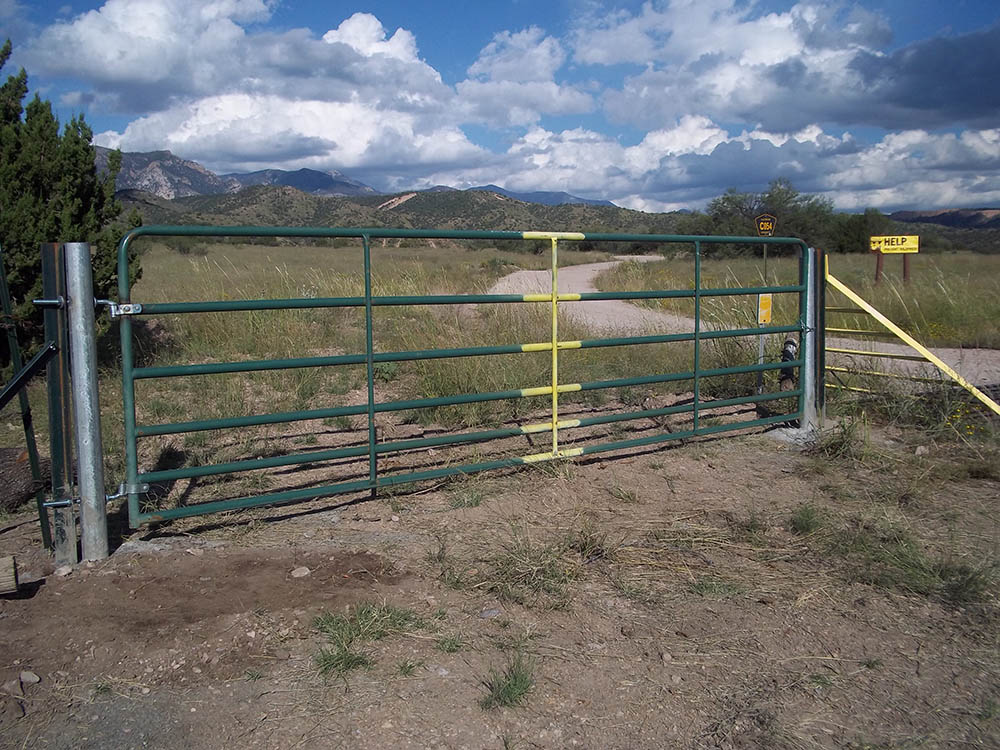
Arizona Horse Fencing Guide
No-Climb Horse Fencing in Arizona: What It Is, When You Need It, and How It Gets Built Right
How mesh size, wire gauge, bracing, top rails, caliche, slopes, washes, wildlife pressure, and gate design determine whether a horse fence is actually safe on Arizona ground.
If you keep horses in Arizona, your fence is not a property line. It is a safety system. A horse that gets a hoof through the wrong fence can end a riding career in a few seconds, and the vet bill usually costs more than the fence upgrade would have.
That is why no-climb fencing has become the default choice on equestrian properties across Prescott, Prescott Valley, Chino Valley, Dewey-Humboldt, and the rest of Yavapai County. Noland Tough builds horse and ranch fencing around the animal, terrain, ground conditions, and access rather than treating every fence line the same.
This guide covers what no-climb horse fencing actually is, the mesh specifications that separate a good roll from a cheap one, how it compares to barbed wire, pipe rail, and board fence, and what a correct installation looks like in rocky, sloped, caliche-heavy Arizona ground.
Why Horse Owners Fence Differently Than Ranchers
Cattle respect a fence because it is uncomfortable. Horses interact with a fence because they are curious, they are hard on it, and they panic in ways cattle do not. That difference drives every decision that follows.
Horses Paw
A hoof that goes through a large wire opening and then gets pulled back can deglove a pastern before anyone reaches the pasture.
Horses Lean and Rub
A fence that is not properly tensioned and braced will belly out within a season on a well-used fence line.
Horses Run
A fence needs enough visibility that a horse traveling at speed sees it in time, especially at dawn and dusk.
Foals Find Gaps
A bottom gap that a mature horse ignores is an escape route for a foal and an entry point for dogs.
Safety note: barbed wire earns its place on cattle perimeter, but on a horse property it is one of the most preventable sources of wire injury. No-climb fence is designed to remove that hoof-sized opening and the barb from the equation.
What No-Climb Fence Actually Is
No-climb fence, also called non-climb or horse mesh, is a woven wire fabric with openings small enough that a hoof cannot pass through and a horse cannot get a foothold to climb. The specifications that matter are simple, and they are the first thing to check on any quote.
Mesh Opening
The standard equine pattern is a 2 inch by 4 inch opening. Smaller patterns exist for foals and for properties with dogs, goats, or heavy predator pressure.
Knot Type
A woven or S-knot construction lets the fabric flex and return to shape after impact. Welded fabric snaps at the weld under the same hit and should be treated as a light-duty product.
Wire Gauge
Heavier gauge fabric holds tension longer and resists deformation from leaning. Lighter gauge is cheaper up front and shows it within a few years.
Coating
Galvanized coating weight determines how the fence handles moisture, sprinkler overspray, and manure contact. Higher coating weight buys years at the bottom of the fabric where corrosion starts.
Roll Height
Common heights run from 48 inches to 60 inches. Taller fabric is worth it wherever you have larger horses, elk pressure, or a slope that shortens effective height.
Put those five items in writing before you sign anything. Two quotes that both say no-climb can be very different fences.
No-Climb Compared to the Other Options
Most Arizona equestrian properties end up with a combination rather than a single fence type. Here is how the realistic options compare on the factors that actually matter.
| Fence Type | Horse Safety | Containment | Visibility | Best Use |
|---|---|---|---|---|
| No-climb mesh | High. No hoof-sized openings and no barbs | Excellent, including foals and dogs | Moderate. Improves with a top rail | Pastures, turnouts, paddocks, property perimeter |
| Barbed wire | Low. Primary cause of wire lacerations | Good for cattle | Poor | Cattle range and back perimeter, not horse turnout |
| Pipe rail | High. No wire to catch a hoof | Very good | Excellent | Corrals, arenas, working pens, high-traffic gates |
| Pipe and cable | Moderate. Cable must stay tight | Good | Good | Large perimeter runs where pipe alone is not practical |
| Wood board | Moderate. Boards break and splinter | Good | Excellent | Frontage and show areas where appearance leads |
| Smooth wire electric | Moderate. Depends on the charge holding | Conditional | Poor without tape | Cross-fencing and rotational grazing |
The common build on a Prescott-area horse property is no-climb mesh with a wood or pipe top rail on the pasture, pipe rail on the corrals and around gates, and no-climb continuing along the perimeter.
Posts: What Holds the Fence Up
Mesh is only as good as what it is fastened to. Post choice is where a lot of horse fence quietly fails.
Wider spacing is acceptable on flat straight runs with stable ground, but terrain and pressure should determine spacing rather than a fixed number applied to the whole property.
Corners and Braces: The Part That Decides Everything
A no-climb fence lives or dies on its brace assemblies. Woven wire mesh carries real tension, and that tension pulls constantly on every corner, end, and gate post for the life of the fence. The mesh does not fail first. The corner does.
Every End and Corner
Every end, corner, gate opening, and significant change of direction needs a braced assembly, not a single post in the ground.
Horizontal Brace Rail
A horizontal brace rail set high on the posts with a diagonal brace wire running opposite the pull direction keeps the post from levering out of the ground.
Line Braces
Long straight runs need periodic line braces so tension is not carried entirely by the ends.
Rocky Ground
Where depth is limited, a concrete footing or a deadman replaces the depth you cannot get.
If a contractor is quoting a horse fence and the brace detail is not in the scope, that is the item to ask about first.
Stretching Mesh in Arizona Heat
Wire expands when it is hot and contracts when it is cold, and northern Arizona swings hard between the two. A fence stretched drum-tight at 100 degrees in July will be under far higher tension on a January morning, and that extra load lands on the brace assemblies. A fence stretched in cold weather and left slack will belly out by summer.
Setting Posts in Caliche, Granite, and Rocky Ground
Much of Yavapai County is decomposed granite, fractured rock, or caliche hardpan sitting anywhere from a few inches to a few feet down. That reality changes the job more than any other local factor.
| Ground Condition | What It Means | Typical Approach |
|---|---|---|
| Caliche hardpan | Cement-hard when dry and often stops a standard auger | Rock bit, hammer drill, or breaker to reach depth |
| Decomposed granite | Drills easily but may hold a post poorly by itself | Correct backfill and compaction, or concrete where needed |
| Fractured rock | Can stop an auger at an unpredictable depth | Adjust spacing slightly in the field and use the correct footing method |
| Limited depth | Shallow posts will not resist mesh tension reliably | Wider footing, concrete collar, or pipe post set in concrete |
This is why a fence bid on rocky ground should always be walked before it is priced. Soil is the variable that moves a schedule.
Slopes, Washes, and Closing the Bottom Gap
Horse property in this part of Arizona is rarely flat. Mesh fabric is rigid across its height, so it cannot bend smoothly over a rolling grade the way smooth wire can.
Gradual Grade
The fabric can be racked so it follows the contour while staying tight.
Steep Grade
The run is stepped between posts and the gap underneath each step is closed with a filler panel, a bottom rail, or rock.
Washes and Drainages
The fence needs a water gap that gives way in a flood and can be reset afterward instead of a rigid section that collects debris and takes the whole fence line with it.
Bottom Gap Control
Anywhere daylight shows under the fabric, a foal can get out and a dog can get in.
Top Rails, Sight Boards, and Finish Details
Mesh alone is hard for a moving horse to see. A top rail solves that and does a second job at the same time. It gives horses a defined edge to lean on rather than pressing on the top of the fabric, which is what rolls the top wire over on a bare mesh fence.
Wood Top Rail
The classic look and the most economical rail option.
Pipe Top Rail
Costs more and outlasts wood by a wide margin, especially where horses crib or where fire risk is a concern.
T-Post Caps
Caps on steel T-posts are not optional on a horse property.
Clips and Staples
They should hold the fabric without crushing it. Overdriven staples cut the coating and start corrosion at the exact point that carries load.
Gates and Access Points
Gates are where a horse fence gets tested every single day. They carry more traffic, more leaning, and more mistakes than any other part of the fence line.
Gate Posts
Gate posts should be pipe or heavy timber and braced independently from the adjoining fence line.
Walk and Equipment Gates
Plan for both a walk gate and an equipment gate wide enough for a tractor, trailer, or water truck.
Horse-Safe Latches
Latches should be the kind a person can work with one hand and a horse cannot work at all.
Drain the Gateway
Keep the ground under the gate hard and drained. A rutted gateway turns into a mud hole and then into a gap.
Wildlife Pressure in Yavapai County
A horse fence in central Arizona is also a wildlife interface. Elk move through the Prescott basin and the higher country, javelina travel in groups and push under fences rather than over them, and coyotes take the smallest available opening.
No-climb mesh handles javelina and coyotes well because the openings are small and the bottom can be held tight to grade. Elk are a different problem. Standard-height no-climb is not designed to stop a mature elk.
Where elk pressure is real, the answer is taller fabric, a raised top rail, or purpose-built elk fencing. Where wildlife crossings are a management goal, fence height and design can be adjusted to let wildlife pass at chosen points while still containing horses.
Maintenance: What to Walk and When
No-climb fence is low maintenance, not no maintenance. A seasonal walk catches nearly everything before it becomes a repair.
| Season | What to Check |
|---|---|
| Spring | Winter frost movement at posts, loose clips, tension after cold contraction, gate sag |
| Early summer | Tension before peak heat, shade and rub spots at feeders and water, T-post caps |
| Monsoon and after | Wash crossings and water gaps, undercut at low points, debris loading, leaning posts in soaked ground |
| Fall | Vegetation along the fence line, corrosion at the bottom wire, brace wire tension, hardware at gates |
Vegetation deserves its own mention. Brush and invasive growth along a fence line traps moisture against the fabric, accelerates rot at wood posts, and can physically pull on wire as it matures. Keeping the line clear is part of keeping the fence.
What Drives the Cost of a Horse Fence Project
Every property prices differently, and anyone giving a firm number without walking the ground is guessing. These are the factors that actually move a bid up or down.
Total Footage
Total linear footage and the number of corners, ends, and direction changes, since each one needs a brace assembly.
Ground Conditions
Caliche, rock, and hardpan add drilling time and sometimes equipment.
Terrain and Access
Slope, tree cover, and whether a truck can reach the fence line at all.
Fabric Specification
Mesh pattern, gauge, coating weight, and roll height.
Post Material
Wood, steel, or pipe, and how many are set in concrete.
Top Rail
Whether the run gets a rail, and whether it is wood or pipe.
Gates
Quantity, width, material, and hardware.
Clearing and Removal
Brush removal, tree work, and whether old fence must come out and be hauled off first.
Two properties of identical length can land far apart on all of the above, which is why a walked bid is worth more than a phone estimate.
Questions to Ask Any Arizona Horse Fence Contractor
Why Property Owners in the Prescott Corridor Call Noland Tough
Noland Tough Fence was founded in 2007 by Crystal and Cash Noland in Eagle Creek, Arizona, out of a fourth-generation ranching background. The company is headquartered in Humboldt and works throughout Yavapai County, the Prescott and Prescott Valley area, Eagle Creek, the Apache-Sitgreaves National Forest, and remote terrain across Arizona.
Licensed Arizona Contractor
- AZ ROC #271421
- Custom Applicator License #453
- Agricultural commercial applicator certifications
- Pesticide safety trainer certificate
Full Fencing Capability
- No-climb and horse mesh
- Pipe rail and pipe and cable
- Barbed wire and wood fencing
- Steel decorative and chain link
- Elk fencing, custom gates, removal, and repair
Water Infrastructure
- Livestock watering facility installation
- Stock tank reconstruction
- Spring box development
- Solar systems and HDPE pipe water systems
Remote Access
- Pack animals for material transport
- Helicopter material transport
- Fence lines beyond truck access
- No job is too rough or remote
That combination matters on an Arizona horse property because the fence is rarely the only thing that needs attention. The same crew can clear the line, build the fence, hang the gates, and solve the water.
Frequently Asked Questions
What is a no-climb fence?
No-climb fence is a woven wire mesh fabric with openings small enough that a hoof cannot pass through and an animal cannot get a foothold to climb. The standard equine pattern uses a 2 inch by 4 inch opening, and it is the most widely recommended fencing fabric for horses.
Is no-climb fence really safer than barbed wire for horses?
Yes. Barbed wire has no small openings to prevent a hoof from passing through and it has barbs that cut when a horse pulls back. No-climb has neither. Barbed wire still has a role on cattle range, but it is a poor choice for horse turnout.
How tall should horse fence be in Arizona?
Common no-climb heights run from 48 to 60 inches. Taller fabric is worth considering for large horses, for properties with elk pressure, and on slopes where downhill grade reduces effective height.
How do you install no-climb fence on rocky or caliche ground?
Post holes in caliche and rock usually require a rock bit, hammer drill, or breaker rather than a standard auger. Where full depth is not achievable, the post is set with a wider footing, a concrete collar, or pipe set in concrete so it still resists the tension the mesh puts on it.
How do you stretch no-climb fence correctly?
Use a full-height stretcher bar so the fabric comes up evenly top to bottom, and pull to correct working tension rather than to the absolute maximum. Over-tensioning in summer heat loads the braces heavily when temperatures drop in winter.
Can no-climb fence be attached to pipe posts?
Yes, and it is a common build in Arizona. The fabric is secured to pipe posts with clips or welded tabs, and pipe is the preferred material at corners, gates, and high-traffic areas because it does not rot or move.
Does no-climb fence keep out dogs, coyotes, and javelina?
The mesh opening is small enough to exclude dogs and coyotes and to stop javelina from pushing through, provided the bottom of the fabric is held tight to grade. Gaps under the fence are the weak point, not the mesh itself.
Will no-climb fence stop elk?
Standard-height no-climb is not designed for elk. Properties with real elk pressure need taller fabric, a raised top rail, or purpose-built elk fencing, which Noland Tough installs as a separate service line.
Do I need a top rail on a no-climb fence?
It is not structurally required, but it is strongly recommended. A top rail improves visibility for moving horses and gives them something solid to lean on instead of rolling the top wire of the fabric over.
How long does no-climb horse fence last in Arizona?
Service life depends on coating weight, wire gauge, post material, and how well the corners were braced. A properly specified and correctly braced fence on pipe or treated posts will outlast a lightly built one by many years, which is why the specification details are worth reviewing on every quote.
Do you serve Prescott and Prescott Valley?
Yes. Noland Tough is headquartered in Humboldt and works throughout Yavapai County, including Prescott and Prescott Valley, as well as remote terrain across Arizona.
Build Horse Fence That Belongs on This Ground
If you are planning a new horse fence, replacing barbed wire on a property you just bought, or repairing a fence line that has started to lean, the next step is a walk of the ground.
Noland Tough works across Arizona ranch, farm, equestrian, and rural property on fencing, livestock water infrastructure, packing and remote access, and licensed vegetation treatment.
Send us the property location and rough fence footage, or schedule a site walk so we can look at soil, slope, drainage crossings, access, and existing fence before putting a scope and a number in writing.
Discuss Your Horse Fencing Project Call 928-322-3658
Noland Tough Fence and Ranch Infrastructure, Humboldt, AZ.
Serving Prescott, Prescott Valley, Yavapai County, and remote properties across Arizona.
AZ ROC #271421 | Custom Applicator License #453
“No job is too rough or remote.”