

Noland Tough Field Guide
Riparian Fencing in Arizona: Protecting Watersheds, Managing Livestock, and Meeting Federal Standards
A field guide for ranchers, conservation partners, and federal land managers — written from the saddle, not from a sales desk.
Schedule a Site WalkIn This Guide
- What riparian fencing is — and what it is not
- Why riparian areas matter to Arizona ranches
- NRCS EQIP cost-share and federal standards
- Wildlife-friendly specs, flood gaps, and off-creek water
- Remote canyon installation and project timelines
On most Arizona ranches, a perennial creek or spring-fed drainage represents less than two percent of the total acreage — and roughly seventy percent of the annual forage value. Riparian corridors stay green when the uplands burn brown. They produce cool-season grasses the rest of the country envies. They also pull cattle in like a magnet.
Left unmanaged, that magnet becomes the single most expensive square footage on the ranch. Cattle stand in the water. Banks collapse. Sediment loads spike. Water temperature climbs. Native species disappear. And the ranch loses the very feature that was carrying the herd through August.
“A fenced creek is not a fenced-off creek. It is a creek you finally get to manage on purpose.”
What Riparian Fencing Actually Is
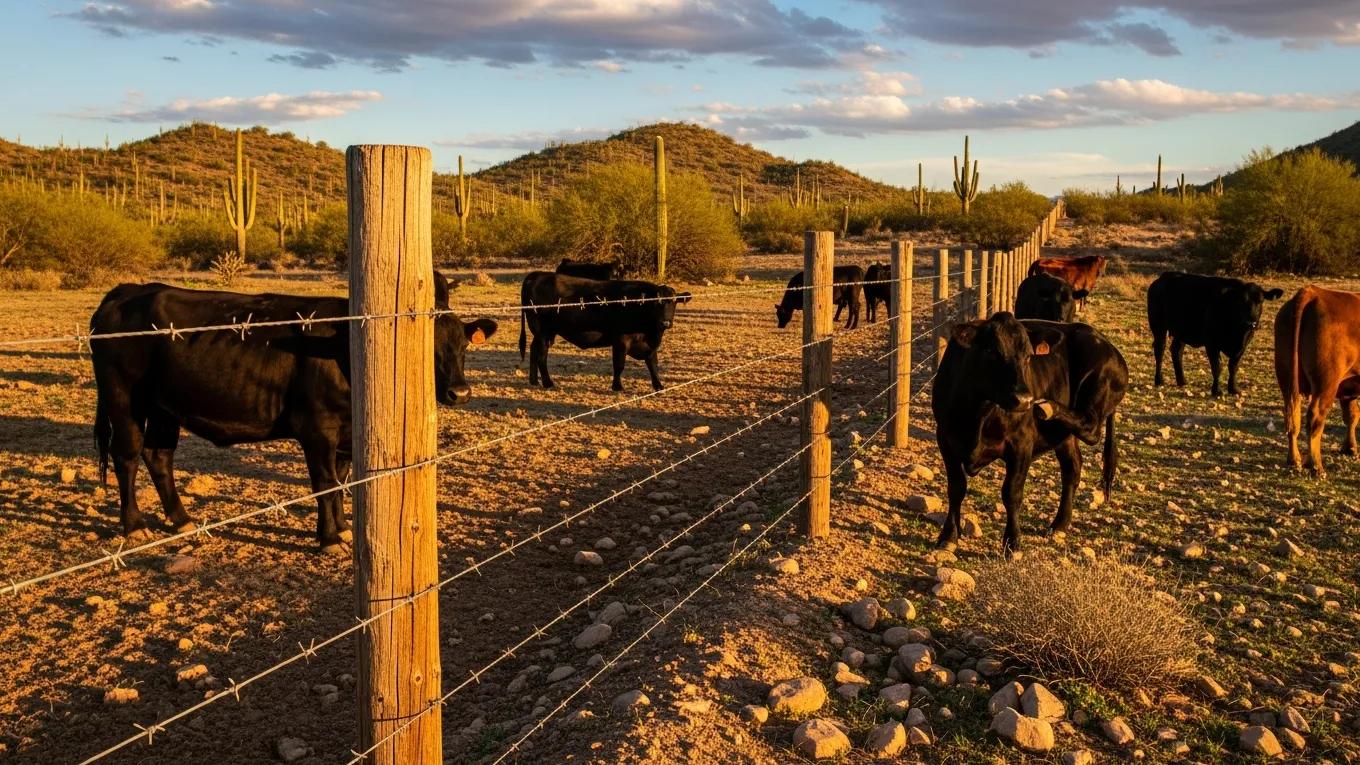
Riparian fencing is a livestock exclusion or controlled-access fence built along the green zone bordering a perennial or intermittent waterway — creeks, springs, seeps, stock tanks, and the wet meadows around them. The goal is not to lock cattle out forever. The goal is to control when, where, and how the herd reaches water and forage along the riparian corridor.
On most Arizona ranches we build for, that translates to one of three configurations: full exclusion, controlled-access lanes, or rotational riparian pastures fenced as their own management units. The right answer depends on the watershed, herd size, topography, and conservation plan. You can also explore more ranch insights in the Noland Tough Field Notes.
NRCS EQIP Cost-Share and Federal Standards
The USDA Natural Resources Conservation Service funds riparian fencing through the Environmental Quality Incentives Program under Conservation Practice Standard 382 — Fence. In Arizona, qualifying producers may recover a substantial share of the installed cost when the project is built to NRCS specifications and inspected by the local field office.
The catch is real: the fence has to be built to the standard. Wire gauge, post spacing, brace assemblies, gate placement, and wildlife-passage requirements are all specified. A fence that does not meet the practice standard does not get reimbursed.
| Funder | Practice / Program | What It Pays For |
|---|---|---|
| NRCS EQIP | Practice 382 — Fence | Cost-share for fencing tied to a written conservation plan. |
| NRCS EQIP | Practice 614 — Watering Facility | Off-creek troughs, tanks, or stock-water development. |
| NRCS EQIP | Practice 533 — Pumping Plant | Solar or mechanical pumps used to move water. |
| USFS / BLM | Allotment Improvements | Riparian fencing inside federal grazing allotments. |
| Partner Programs | AZ Game & Fish, Trout Unlimited, NFF | Watershed and native-fish recovery co-funded projects. |
Materials, Spacing, and Wildlife-Friendly Specs
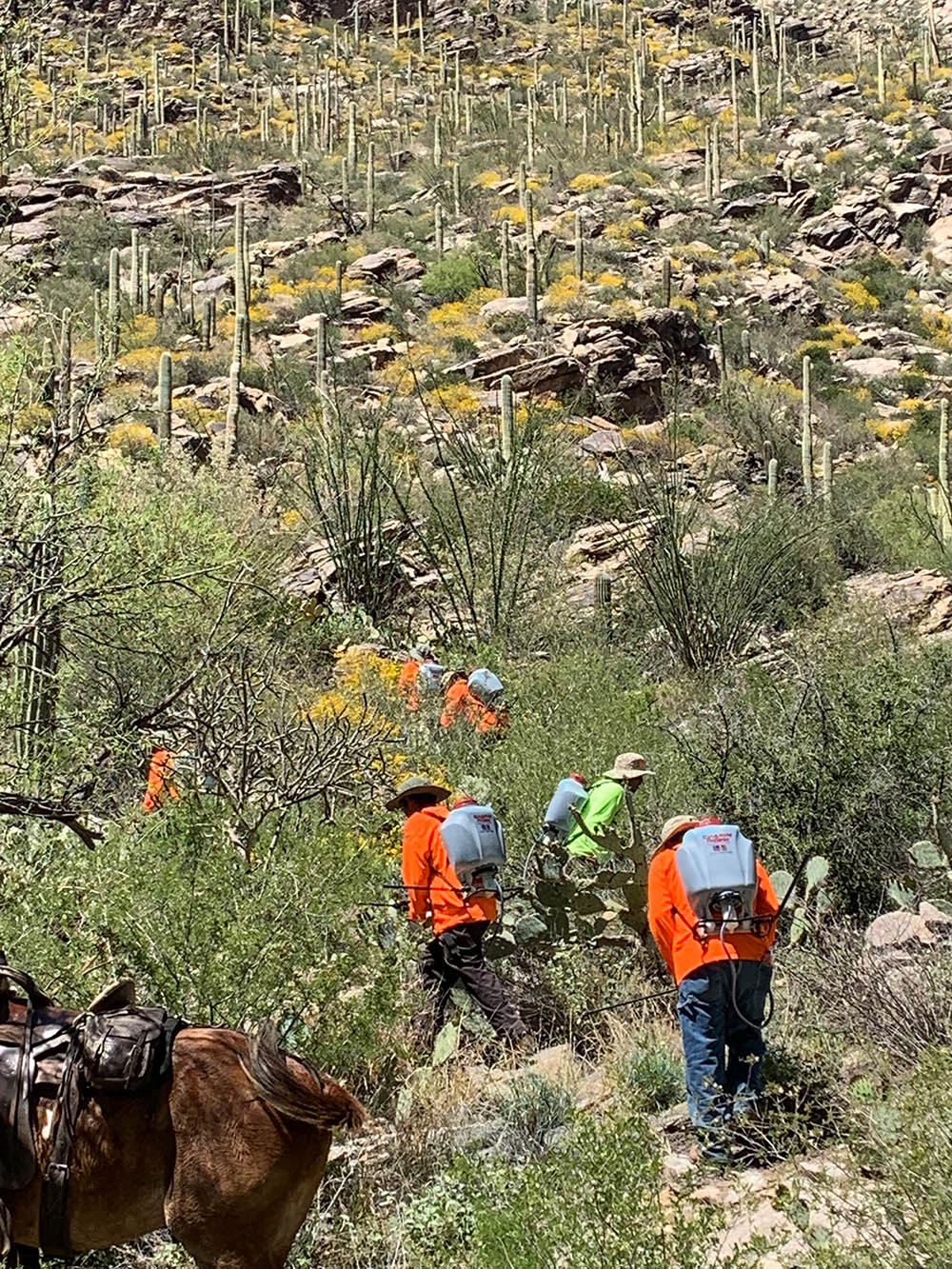
Riparian restoration and vegetation management often work hand-in-hand with long-term watershed protection.
A riparian fence in Arizona has to hold cattle, survive monsoon flood debris, and let wildlife move through it without injury. These are the baseline specifications we build toward when a project is enrolled in NRCS EQIP or a federal allotment improvement.
| Component | Specification | Field Notes |
|---|---|---|
| Wire System | 4-strand barbed wire, smooth top and bottom | Wildlife-friendly heights with smooth upper and lower strands. |
| Posts | 6 ft or 6.5 ft steel T-posts | Driven deep enough to hold in saturated riparian soil. |
| Brace Assemblies | H-brace or pipe brace | Used at corners, gates, direction changes, and pressure points. |
| Flood Gaps | Drop-wire panels or float gates | Designed to release under flood load and be re-hung after monsoons. |
| Wildlife Spec | Top strand ≤ 42", bottom strand ≥ 16" smooth | Supports safer movement for elk, deer, pronghorn, and other wildlife. |
Why Cheap Riparian Fence Gets Expensive Fast
Undersized braces, rigid channel crossings, poor wire heights, shallow posts, and no off-creek water source can turn one monsoon season into a full rebuild.
Off-Creek Water: The Other Half of the Job
A riparian fence without an off-creek water source is a fence under siege. Cattle will lean, push, and walk it down to reach the only water they know. That is why Noland Tough pairs fence work with integrated water systems such as spring boxes, HDPE pipeline, solar pumps, storage tanks, troughs, and stock tank reconstruction.
| Water Component | Typical Spec | Purpose |
|---|---|---|
| Spring Box | Concrete or poly collection vault | Captures spring flow cleanly and screens debris. |
| HDPE Pipeline | 1"–2" high-density polyethylene | Moves water to relocated troughs. |
| Solar Pumping Plant | PV array, controller, pump | Provides remote water movement without grid power. |
| Storage Tank | 1,500–10,000 gallon poly or steel | Buffers solar output and supply interruptions. |
| Trough & Float | Concrete or poly trough with wildlife ramp | Creates the final livestock water delivery point. |
Getting the Fence Where the Truck Cannot Go
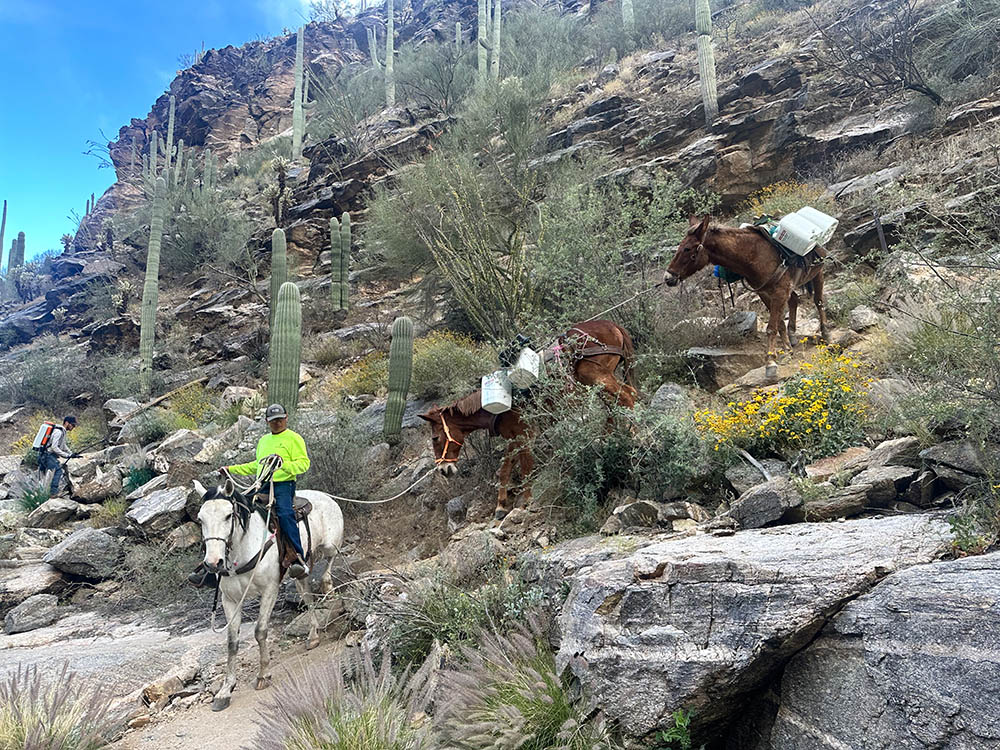
Remote Arizona projects often require pack mules and specialized logistics to move materials where trucks cannot reach.
Some of Arizona’s most important riparian fence runs through country no flatbed can reach — canyon bottoms, wilderness boundaries, federal allotments, and creek drainages a half-day’s ride from the nearest two-track.
Most contractors decline those jobs. Noland Tough is built for them. Pack mules carry steel, wire, and water by the load. Helicopters sling braces, gates, and pipe to staged drop points. A licensed sawyer clears the fence line under USFS protocol where right-of-way clearing is part of the contract.
“No Job Is Too Rough or Remote.” — and the pack string, helicopter, and sawyer ticket prove it.
How a Riparian Project Actually Runs
| Phase | Duration | What Happens |
|---|---|---|
| Site Walk | 1 day | Walk the creek, map alignment, water points, and access routes. |
| NRCS Planning | 4–12 weeks | Conservation plan, EQIP application, and final specifications. |
| Materials Staging | 2–4 weeks | Steel, wire, HDPE, tanks, and pumps ordered and staged. |
| Right-of-Way Clearing | 1–3 weeks | Fence line cleared under required protocol. |
| Fence & Water Build | 3–10 weeks | Fence, flood gaps, gates, spring box, pipeline, pump, storage, and troughs. |
| Certification | 1–2 weeks | Field inspection, as-built documentation, and cost-share certification. |
Why Noland Tough Builds Riparian Fence Differently
Licensed Arizona Contractor
AZ ROC #271421 across the fence trades Noland Tough builds.
Federal Project Experience
Experience with USFS range improvement and remote allotment work.
Fence + Water Systems
Integrated crews for fencing, spring boxes, pipeline, tanks, and troughs.
Remote Logistics
Pack mule, horse, and helicopter coordination for roadless country.
Licensed Sawyer Capability
Fence-line clearing handled under required federal protocols.
Fourth-Generation Arizona Roots
Ranching experience shaped by Arizona terrain, weather, and livestock.
Learn more about the company’s background on the About Us page, or review Noland Tough’s full range of ranch and fencing services.
Frequently Asked Questions
It varies by producer category, program year, and the specific practices in the contract. Beginning, veteran, and historically underserved producers may qualify for enhanced payment rates.
No. Full exclusion is one option, but many ranches use controlled-access drinking lanes or riparian pastures depending on the conservation plan and watershed sensitivity.
Built correctly, yes. The difference is in brace assemblies, post embedment, and flood gaps designed to release under load and be re-hung after high water.
Yes. Spring boxes, HDPE pipeline, solar pumps, storage tanks, and troughs can be built alongside the fence under one schedule and one accountable crew.
Yes. Noland Tough works on USFS allotments, BLM-related range improvements, wilderness boundaries, and remote Arizona ranch country where specialized logistics are required.
Walk Your Creek With Us
If the creek is doing too much of the work on your ranch, schedule a site walk with Noland Tough. We will look at the herd, the water, the access, and the fence alignment — then give you a straight answer.
Contact Noland ToughReferences and Authority Sources
- USDA Natural Resources Conservation Service — Conservation Practice Standard 382
- NRCS Arizona — Environmental Quality Incentives Program guidance
- U.S. Forest Service range improvement standards
- Arizona Game & Fish wildlife-friendly fencing guidance
- Arizona Registrar of Contractors license verification